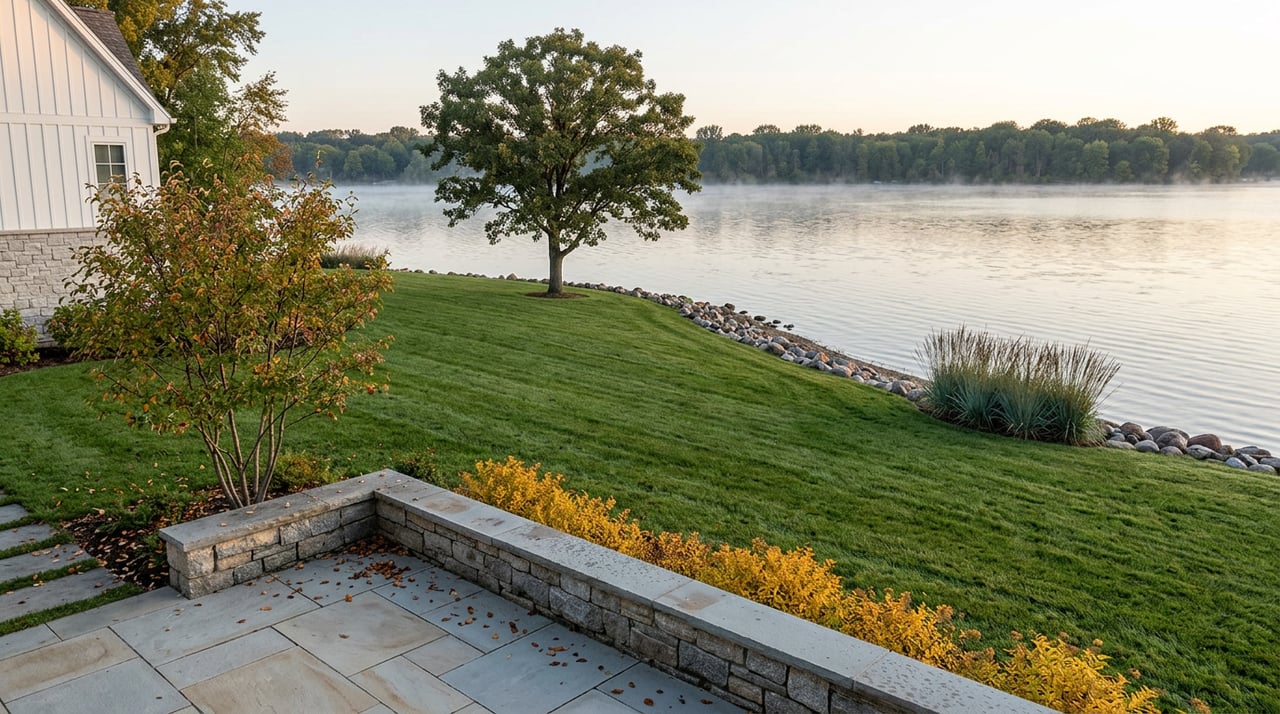
Bob Ebert has a rock. It sits in the water in front of his house, and after enough years on Prior Lake, he's learned to read it the way other people read a gauge. This Labor Day, the water sat about a foot below where that rock usually tells him it should be. His pontoon, built to run shallow, handled it fine. Plenty of other boats on the lake that weekend did not.
The easy explanation is drought, and drought is real. As of early September, nearly half of Minnesota sits in severe drought conditions, according to the state's Department of Natural Resources, and DNR officials have been warning boaters statewide that fall launches will be trickier than usual. But drought alone doesn't explain why Prior Lake feels this particular squeeze harder and longer than the lakes just upstream from it. That answer has less to do with rainfall and more to do with where Prior Lake physically sits.
The Lake at the Bottom of the Line
Prior Lake occupies the lowest point in its own watershed, a drainage area of roughly 30 square miles that includes Spring Lake, more than 700 wetlands, and every ditch and low spot that feeds them. Water runs downhill toward Prior Lake, not away from it, which means Prior Lake is the last stop, not the first.
That geography cuts both ways. In wet years, Prior Lake keeps rising even after a storm has passed somewhere else in the watershed, because water is still working its way downstream into the lake. In dry years, the same plumbing runs in reverse and against the lake's favor: Spring Lake, sitting upstream, tends to recover fully from a dry stretch before enough water even reaches the channel that feeds Upper Prior. Prior Lake waits its turn.
Size works against it too. Lower Prior Lake alone covers close to 1.5 square miles of open surface, more than any other lake in the watershed district, and open surface is exactly what evaporation feeds on during warm, windy stretches. The lake also runs deeper than most of its neighbors, which means it's usually the last to freeze over each winter. More open water late into the season sounds pleasant until you realize it also means more weeks of evaporation working against the level before ice finally locks it in.
None of this is unique to 2026. It's just how the lake is built. What changes year to year is how hard the weather leans on that structure.
Where the Squeeze Actually Shows Up
The mechanism is abstract until you're standing at a boat landing. On Prior Lake, that's the DeWitt Boat Launch on Upper Prior and the Sand Point access on Lower Prior, and low water treats them differently.
Lexie Seurer has run Prior Lake Pontoon Rental with her dad for sixteen years, long enough to notice exactly how a shrinking lake changes a Tuesday at the ramp. The problem isn't just less water. It's what boaters do when the ramp doesn't reach far enough anymore. Power loading, gunning the engine to drag a boat up onto a trailer instead of winching it, washes the sand and gravel out from under the concrete slab and leaves a hole behind the ramp. That hole becomes the next boater's problem.
The DNR's advice this fall is specific: use idle speed, use the trailer winch, and check where the ramp actually ends before backing in. Stumps, rocks, and sandbars that sat safely underwater in a normal year are closer to the surface now, and a prop or a lower unit doesn't know the difference between a wet year and a dry one.
"Pretty much everybody has a beach now," Seurer said.
It's the kind of line that sounds like a joke until you think about what it actually means. The shoreline that used to disappear at the waterline is exposed all along the lake this year, for better and for worse.
This Isn't the First Time the Lake Has Done This
Prior Lake residents who've been around long enough know the lake runs in cycles, and the cycles can get severe. During the drought of the 1930s, the lake stayed below 896 feet for thirteen consecutive years, according to the Prior Lake Association's own history of the lake. At its worst point during that stretch, Lower Prior dropped a further twelve feet below that mark and split into six separate, disconnected pools. Whatever a foot down feels like today, the lake has been through worse and come back.
The infrastructure built since then helps with flooding far more than it helps with drought. The current outlet structure, a fixed crest weir installed in 2010, only opens once the lake reaches 902.5 feet, and at full flow it can drain the lake by roughly an inch a day. That's a tool for managing too much water. It does nothing when the problem is too little. There's no equivalent valve to turn on when the lake runs low. The only fix is rain, snowmelt, and time, which is precisely why the upstream position matters so much: Prior Lake has no shortcut back.
The last time conditions got bad enough to force action, in the fall of 2022, the fix wasn't engineering. It was community funding. When DeWitt became difficult to use and the Sand Point access needed emergency repair, the Prior Lake Rotary, the City of Prior Lake, Spring Lake Township, and the Prior Lake Sportsmen's Club split a repair bill that approached $10,000 to keep boaters able to get their boats safely off the water. That kind of patchwork response tends to be what happens between rain cycles on a lake that can't drain its way out of a dry year.
What to Actually Do About It This Month
If you're still getting out on the water before the season closes, a few habits matter more in a low-water year than a normal one.
- Winch your boat onto the trailer instead of power loading it. It's slower, but it's the difference between a stable ramp next week and a washed-out one.
- Check the ramp's end point before backing in, especially at DeWitt, where shallow stretches have been an issue in past low-water years.
- Watch for exposed rock and sandbars in water you'd normally trust, particularly near shoreline you haven't used since spring.
- If you dock or lift your boat privately, keep an eye on the waterline daily rather than assuming this week looks like last week. Levels can keep dropping through a dry stretch with no single dramatic day to mark the change.
None of this fixes the underlying math. It just keeps a dry year from turning into a damaged boat or a torn-up ramp.
The Shape of the Problem, Not Just the Weather
The easiest mistake this fall is treating Prior Lake's low water as identical to what every other Minnesota lake is experiencing right now. Statewide drought is the trigger, but Prior Lake's position at the bottom of its watershed and its unusually large evaporative surface mean it will always feel a dry stretch a little harder and shake it off a little slower than the lakes just upstream. That's not a bad year. It's the lake's baseline behavior showing up whenever the rain stops for long enough.
Bob Ebert's rock will keep doing its job long after this particular dry spell ends, and so will everyone else's personal markers around the shoreline. The lake has run this pattern before and it will run it again. Knowing why makes it a lot easier to read what you're looking at the next time you back a trailer down DeWitt and wonder where the water went.
If you're thinking about what a season like this means for a property on the water, or just want a straight answer from someone who pays attention to this lake year-round, Nick Thull is happy to talk it through. Let's Connect.