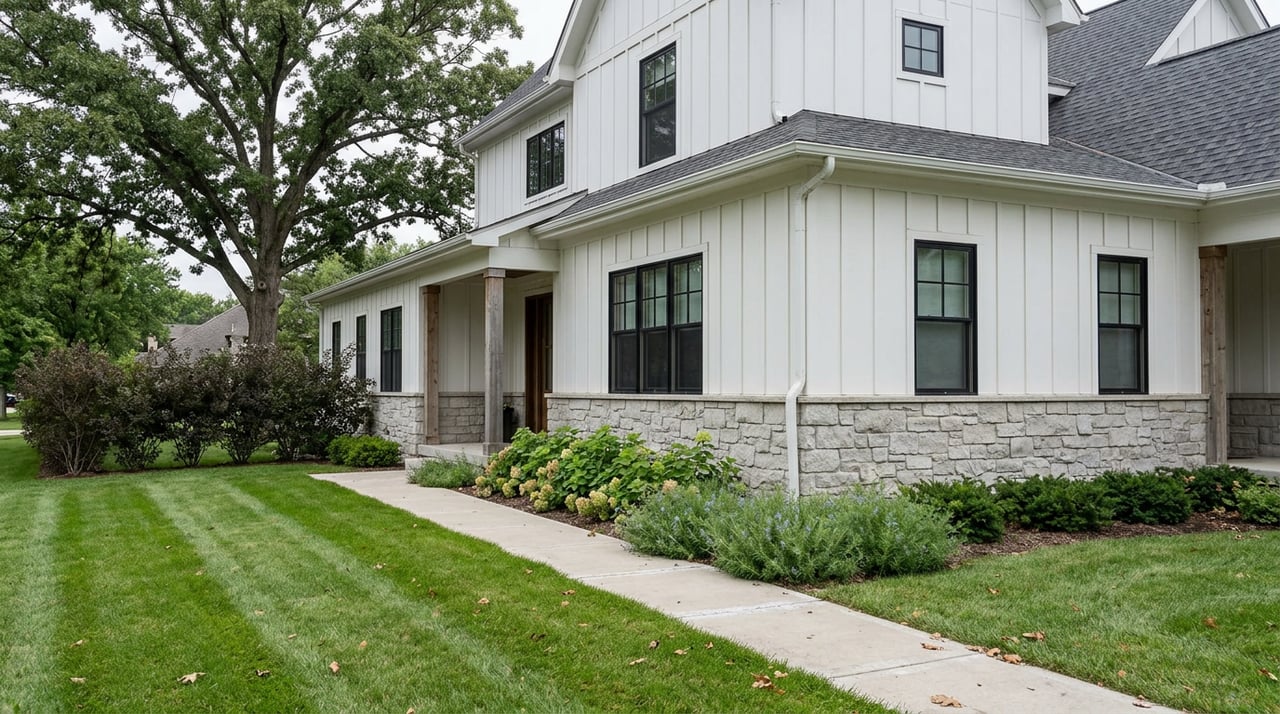
Most Lakeville sellers assume the whole city runs on municipal sewer and water by now. It doesn't, and the reason has nothing to do with a home's age, price, or which side of town it sits on. It comes down to a boundary line most residents have never heard of, and if your property happens to sit on the wrong side of it, the disclosure rules at closing work differently than they do for the house three streets over.
That boundary is the Metropolitan Urban Service Area, or MUSA. It is the line the Metropolitan Council draws around where sanitary sewer service is allowed to extend, and Lakeville's own planning page states it plainly: the city has adopted staged growth areas identified on the MUSA map as expansion areas, extending sewer service in roughly ten-year intervals, and areas outside that boundary still need individual septic and well systems. Lakeville is designated a Suburban Edge community under the region's Thrive MSP 2040 framework, and most of the city is slated to eventually fall inside the 2040 MUSA. Eventually is doing a lot of work in that sentence. Not every parcel gets reached in the same decade, which means a property that was outside city utilities in 2015 might be inside them by 2030, and a property just past today's edge might still be on well and septic when the next stage arrives.
For a buyer or seller, that translates into a very specific problem. Two homes can sit less than a mile apart, look similar on paper, and follow completely different rules when the property changes hands.
The disclosure that can stop your closing, and the one that can't
Minnesota law treats well disclosure and septic disclosure as if they were a matched set. They are filed around the same time, worried about with the same intensity, and treated by most buyers and agents as functionally identical. They are not, and the difference matters most at the exact moment you expect the deal to be finished.
Under Minn. Stat. § 103I.235, a seller has to disclose the location and status of every well on the property before the buyer signs a purchase agreement, and at closing, a well disclosure certificate has to be filed. The county recorder is not allowed to record the deed without either that certificate or a specific certified statement on the instrument itself. In practical terms, a missing well certificate can hold up your title transfer at the courthouse. The Minnesota Department of Health's well disclosure guidance walks through the mechanics, but the short version is that this disclosure has real teeth.
The septic disclosure does not. Sellers still have to disclose a system's condition under Minn. Stat. § 115.55, but the same statute goes out of its way to say local governments cannot use a septic ordinance to hold up a deed recording. A septic problem that surfaces after closing is a contract dispute and a money problem for the buyer to negotiate. It was never built to be a title problem.
Here's how the two compare side by side:
| Well Disclosure | Septic Disclosure | |
|---|---|---|
| Governing statute | Minn. Stat. § 103I.235 | Minn. Stat. § 115.55, subd. 6 |
| Can it block recording the deed? | Yes, the recorder cannot record without it | No, state law specifically prohibits this |
| Filing fee | $54, collected by the county recorder | None |
| Buyer's claim window | Runs noticeably longer than the septic claim | Two years from closing |
| What a claim looks like | A title and recording issue | A contract and negotiation issue |
That last row is the one worth sitting with. A buyer who discovers a septic problem two years after closing in Lakeville is negotiating a repair credit, not challenging a title. A buyer who discovers an undisclosed well is dealing with something the county recorder was never supposed to let through in the first place.
Dakota County didn't write one rule. It wrote an exception, and Lakeville isn't in it
Here's where local knowledge actually pays off. Dakota County's own septic systems page states that the county requires a compliance inspection before a property is sold, but that requirement applies specifically where the county itself administers septic systems: Randolph, New Trier, Hastings, and the townships of Waterford and Randolph. Everywhere else in the county, cities and townships run their own septic ordinances, built on the Minnesota Pollution Control Agency's standards and the county's baseline Ordinance 113.
Lakeville is in that "everywhere else" category. The city's own code defines an individual sewage treatment system under its health and sanitation and zoning titles, which confirms these systems still exist and are still regulated within city limits, separately from whatever a friend in Hastings or a cousin in Randolph might describe from their own closing. If you've heard secondhand what the "Dakota County septic rule" requires, there's a real chance the person telling you that story lives in one of the five jurisdictions where the county runs the show directly, not one of the cities, like Lakeville, that write their own version.
Lakeville's utilities page describes a sanitary sewer system with 24 lift stations moving wastewater to Metropolitan Council treatment plants in Empire Township and Eagan, which covers most of the city. But the city's own wellhead protection page also reminds property owners with septic systems that regular maintenance matters for protecting the shared municipal water supply, a reminder that would be unnecessary if every property in town were already tied into city sewer.
What a certificate of compliance is actually worth
If a septic system does need a compliance inspection, whether because a lender requires it or because the seller wants one on file before listing, the resulting certificate has a shelf life. An existing system's certificate of compliance is valid for three years from issuance. A newly installed system's certificate is valid for five years. A certificate issued two years ago is close to expiring. One issued last month is not. This matters because sellers sometimes wave an old certificate as if it settles the question permanently, when in fact its clock has been running the whole time.
A private, state-licensed inspector performs the compliance inspection, not a city employee, and the completed report goes to the local municipality with jurisdiction over that system. In Minnesota, a compliance inspection for a sale typically runs a few hundred dollars, and it is worth scheduling early rather than during the final week of a transaction.
The forgotten well problem, and the grant that exists because of it
Wells create a version of this same timing risk in the opposite direction. A property can have a well that hasn't been used in decades, sometimes one the current owner doesn't even know exists. Farmington's public FAQ on the topic, which speaks to the shared Dakota County groundwater picture that Lakeville sits inside, states there are approximately 30,000 unused wells across the county, many of them buried or simply forgotten by the time a property changes hands.
An unsealed, unused well is a legitimate contamination pathway, since it offers a direct route for surface water and runoff to reach the aquifer. State law requires a well to be sealed if it isn't in use and doesn't have a maintenance permit, or if it poses a safety or health risk, and this is not a project a homeowner can do without a licensed contractor. Dakota County has a well sealing grant program that reimburses half of eligible sealing costs, up to $3,000 per well, specifically to help with this. If you're preparing to list an older or larger-lot Lakeville property and a survey or inspection turns up a well nobody has thought about in years, that grant is a real resource worth knowing about before you're staring down a repair credit request at the closing table.
A short FAQ
Does every Lakeville home have city sewer and water? No. Properties outside the current Metropolitan Urban Service Area still rely on individual well and septic systems, and the boundary has moved in stages over time rather than all at once.
If my septic system fails after closing, can the sale be undone? No. Minnesota's septic disclosure statute specifically bars local governments from using it to hold up a deed recording. A septic issue becomes a negotiation between buyer and seller, not a title dispute.
Does Dakota County require a septic inspection before every sale? Only in Randolph, New Trier, Hastings, and Waterford and Randolph townships, where the county administers septic systems directly. In Lakeville and most other Dakota County cities, the local ordinance governs instead.
How do I find out if my property has an old, unsealed well? Start with your property records and any prior survey, and consider Dakota County's well sealing grant program if one turns up. An unsealed, unused well is worth addressing well before you list.
If you're weighing a sale on a Lakeville property that still runs on well or septic, or you're comparing homes on either side of the city's utility line, it helps to have someone who has actually read the fine print before you're under contract. Nicholas Thull has been working buyers and sellers through exactly this kind of local detail across Lakeville and the south metro since 2019. Let's Connect.